3. Setting Up & Managing Activities
Introduction
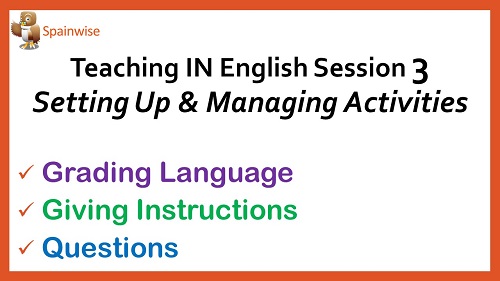
Grading Language
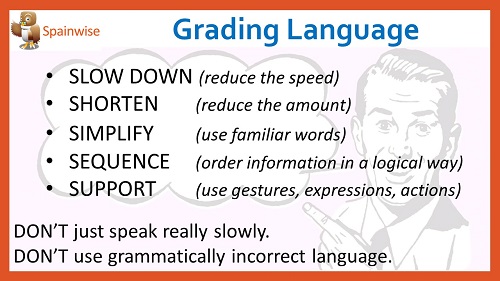
Grading language means choosing language that is at or only slightly above the language level of the learners.
We want to aim for them to understand 80-90% of what we say.
If they understand 100% then it’s too easy and there’s no challenge, which may lead to boredom.
Only speaking more slowly isn’t enough, we also have to consider the amount of information, the order we give them instructions, the grammar and vocabulary we use and how we can use gesture, expression, mime or actions to help them understand.
However, we must be careful not to speak incorrectly in an effort to be understood. We need to model grammatically correct language at all times.
Giving Instructions
Although teachers traditionally talk a lot in class, the foreign language classroom is different.
It’s necessary to allow students the opportunity to speak more as they need to practise.
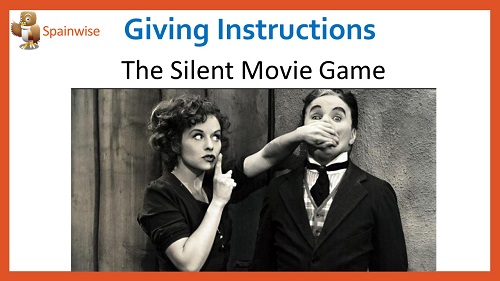
An activity to emphasise the idea of reducing TTT and encouraging STT.
Teachers work in groups of four or five (facing each other or sitting in a circle).
Place a pile of the “Silent Movie” cards in the middle.
Teachers take it in turns to take a card and, using only the body part(s) indicated on the card, mime the instruction given.
The rest of the group have 1 minute to guess it correctly.
If it is guessed correctly, the teacher keeps the card. If not, the card goes to the bottom of the pile.
Continue until all the cards have been used.
The winner is the person with the most cards.
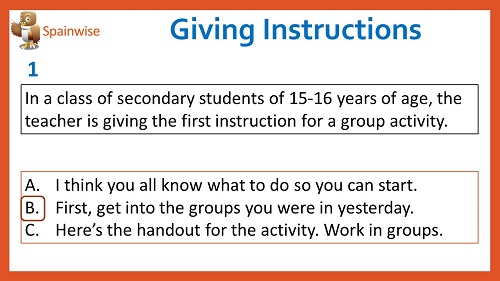
Pinchad en la flecha a la derecha para ver la respuesta
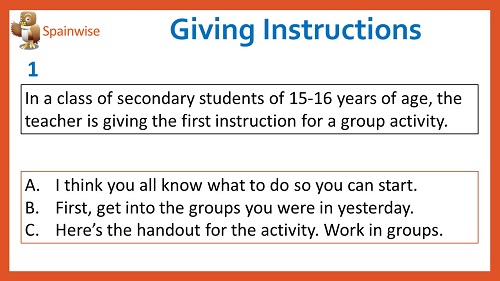
A = is not even really an instruction!
B = seems to be the first in a sequence of instructions with a clear grouping arrangement.
C = if you give them the worksheet first then they often don’t listen to the rest of the instructions. Plus the grouping is very vague.
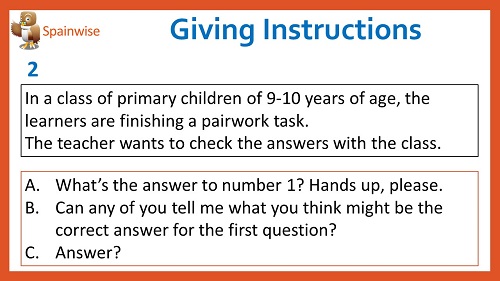
Pinchad en la flecha a la derecha para ver la respuesta
A = a simple, easy to understand question with an instruction for how to answer.
B = this is too long and complicated for most primary students.
C = this is so short it’s almost rude and doesn’t model a correct question form to the students.
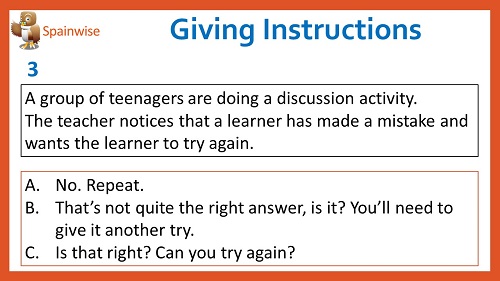
Pinchad en la flecha a la derecha para ver la respuesta
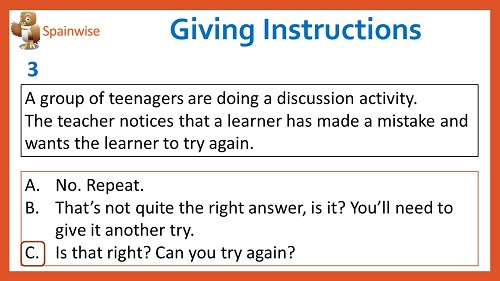
A = this would sound like you were annoyed or bored and it wouldn’t encourage the student to try again.
B = this might be a little complex, depending on how old the students are and their level of English (the teenagers could be 13-18).
C = this is short and simple enough to be appropriate for most teenagers. There’s no criticism of their mistake but rather encouragement to try again.
Pinchad en la flecha a la derecha para ver la respuesta
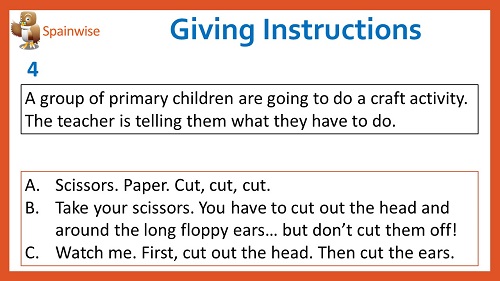
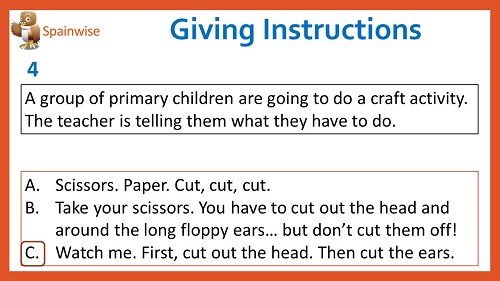
A = this is a series of words rather than an instruction, and it’s not clear what they’re supposed to be cutting.
B = this is definitely too long and complicated for primary kids.
C = this are clearly sequenced, simple instructions, starting with the teacher demonstrating the activity.
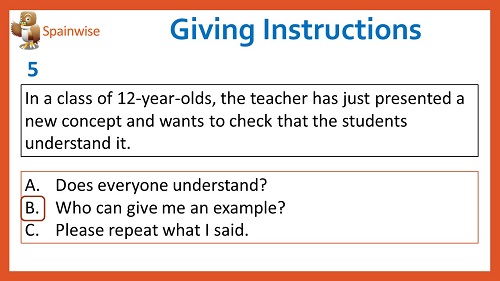
Pinchad en la flecha a la derecha para ver la respuesta
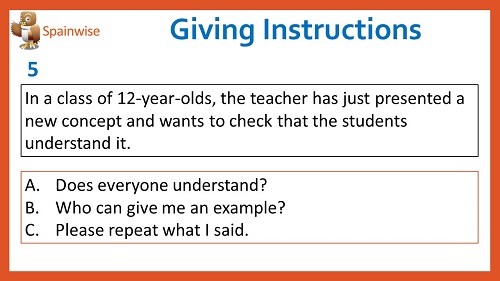
A = this is a terrible question as most students will answer yes, whether they understand or not.
B = by asking for an example, the teacher can check if the students have actually understood and processed the information.
C = repeating is not the same as understanding, perhaps they can all repeat what the teacher said but all this shows is that they were listening, not that they get it.
Concept-Checking Questions (CCQs) & Instruction-Checking Questions (ICQs)
This is the worst question we can ask!
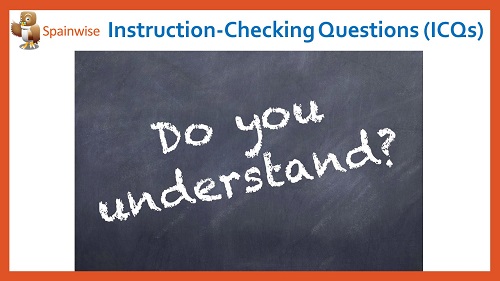
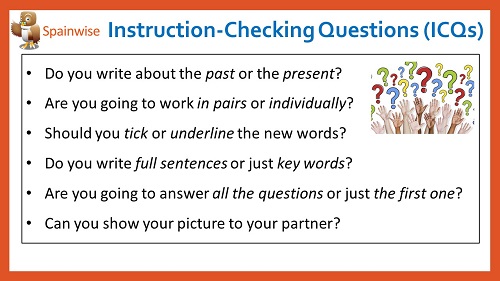
Instruction-Checking Questions, or ICQs, are often presented as a binary choice.
This means that there is a definite right or wrong answer and the teacher will know immediately if the students have understood the instructions.
Teachers work in groups and each group is given a different activity.
They first decide what age and/or level it is aimed at and what the objective of the activity is.
They then decide how they would grade their language, what instructions they would give and what ICQs they could ask.