2. Starting Off
Introduction
This Tic-Tac-Toe Grid is a simple visual organiser which can be used in a variety of ways in CLIL (and other) lessons.
The CLIL Ball can be used to activate prior knowledge about a topic or about language or to revise or assess what your students have learned.
You need a blow-up plastic ball that you can write on (so a light colour) and a permanent black pen.
Instructions
Write down some questions that you would like to ask your students. Write them all over your blown up ball, using the permanent pen.
Ask your students to stand in a circle. Make sure everyone can see each other.
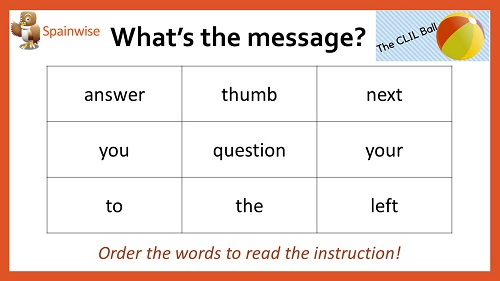
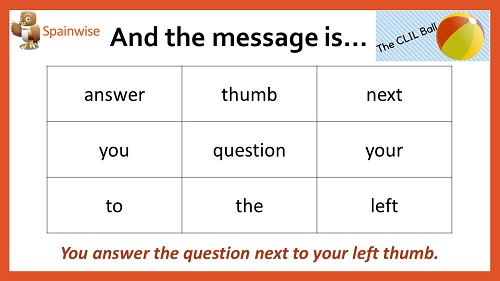
Instruct your students that when they catch the ball (with both hands), they answer the question next to their left thumb.
Throw the ball to a student. S/he answers the question next to his/her left thumb. If s/he can’t, you can help with some prompts.
You can choose: the student throws the ball back to you or to another student. S/he answers the next question.
Continue for a specified length of time (put a timer for the activity) or until everyone has had a minimum number of turns.
Routines
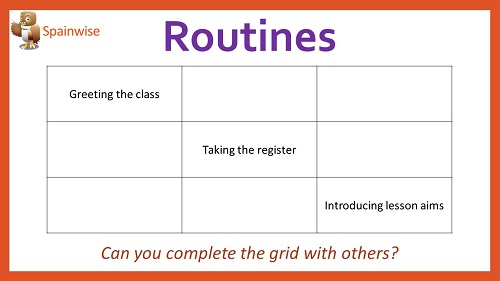
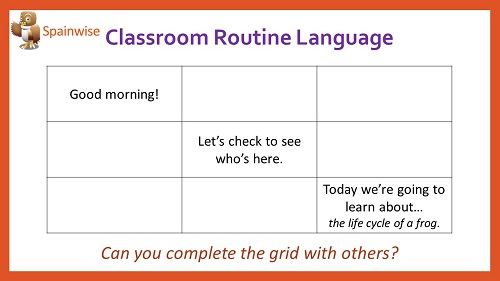
This Tic-Tac-Toe Grid is a simple visual organiser which can be used in a variety of ways in CLIL (and other) lessons.
Print a copy of this for each teacher to complete.
Teachers then compare their grids.
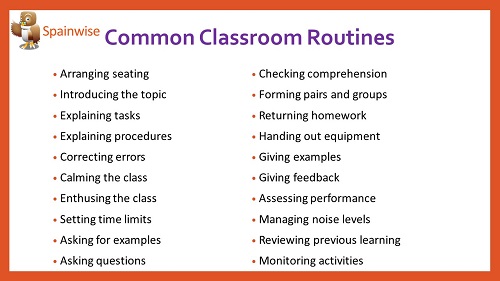
Commonly, between 25-50% of a lesson may consist of standard routines. And perhaps even more… it has even been said that up to 80% of a lesson could be “just” routines!
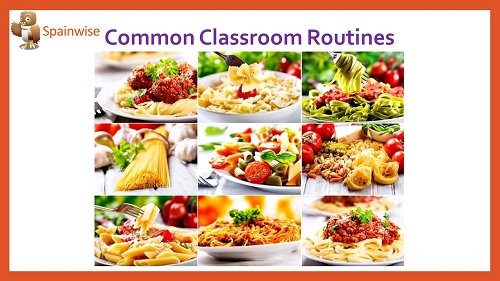
A lesson is like a pasta dish: The routines are pasta, the content of the lesson is the sauce.
Every pasta dish has pasta (every lesson has the same routines) but the sauce is what makes each dish different (the content of the lesson is what changes each time).
Print a copy of this for each teacher to complete.
Teachers then compare their grids.
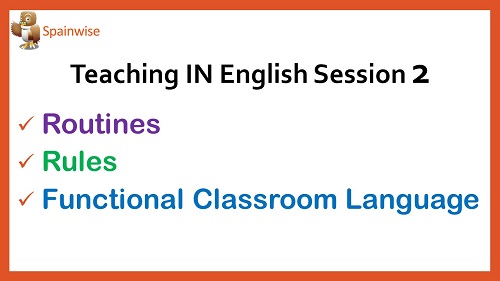
Rules
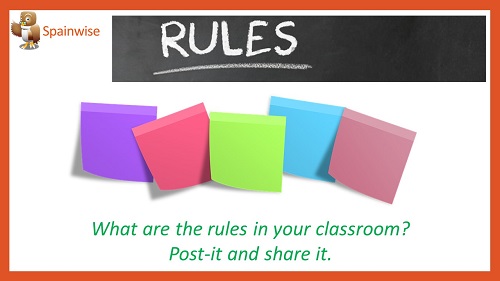
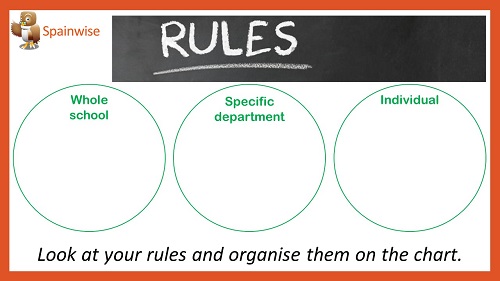
Teachers organise their post-it note rules onto the Venn Diagram: rules that they all have in their classes, rules that some of them have and rules that just one person has.
Can they think of any more rules that fit in these categories?
Look at the rule sin the “Specific department” circle: why do these rules only apply to certain groups? (age? subject? level of English? activity type?…)
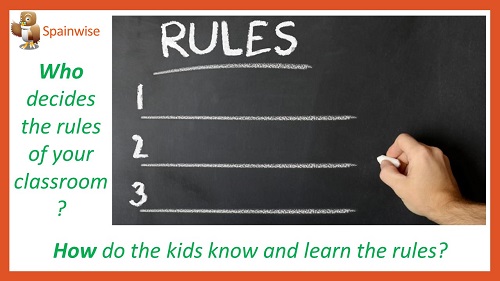
“Rules are taught, not caught.”
Fun ideas to teach and practise rules (mostly for primary kids):
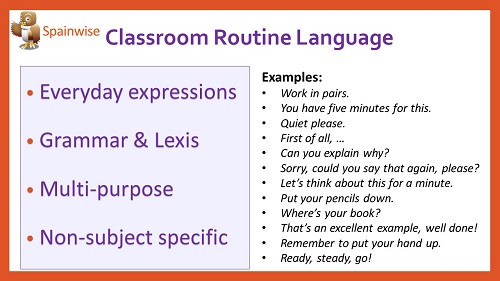
Functional Classroom Language
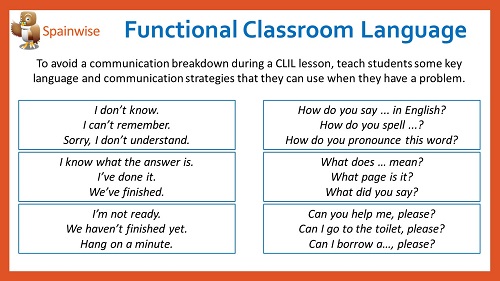
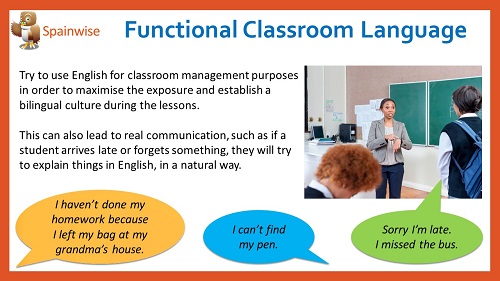
What specific expressions and language would you need to deal with this class?
Is there anything you’d like to say but you’re not sure about?
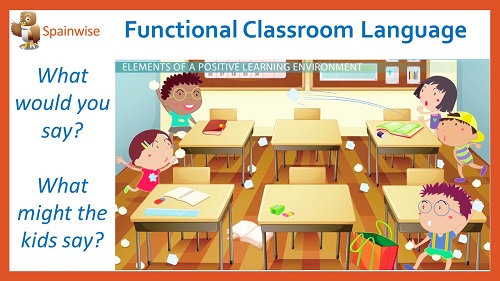
What specific expressions and language would you need to deal with this class?
Is there anything you’d like to say but you’re not sure about?
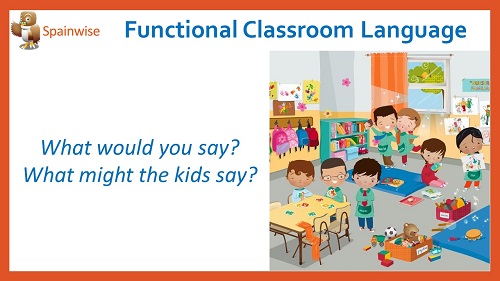
What specific expressions and language would you need to deal with this class?
Is there anything you’d like to say but you’re not sure about?
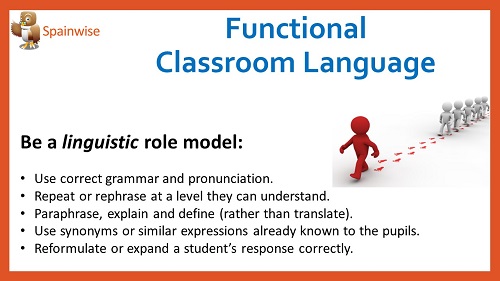
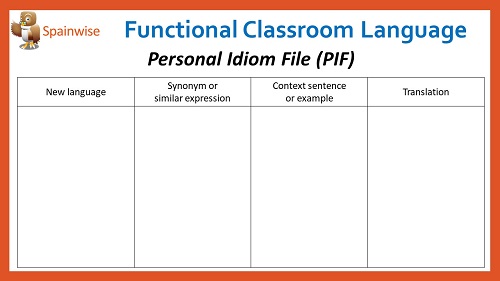
PIF (Personal Idiom File): A file in which learners store useful words and phrases.
To support learners best, it helps if the whole CLIL team decides on a strategy for the glossary or PIF, and uses it consistently.
Learners should be provided with words and definitions in English for a glossary as well as a clear example of the word or phrase in a context where the meaning of the word is clear.
Learners can also illustrate the definitions with drawings or photographs.
The more learners are involved in creating their own glossaries, the more likely they are to retain the words they are working with.
Make sure you provide tasks or activities which recycle the words so as to help learners to retain vocabulary.