Unknown Language: Reflection on L2-Learning Experiences

Introduction

What is it?

  • Four hours’ tuition
  • Beginner level
  • Unfamiliar foreign language

What are the outcomes?

  • Awareness of the learning experiences and feelings of a learner being taught a new language, with little or no use of the learner’s first language.
  • Ability to identify the aims and objectives of the lesson and the ways in which these were or were not achieved through the methodology, materials and class management techniques employed.
  • Awareness of a few of the main elementary contrastive features of the taught language and of English.

Objectives

Objective 1

Participate as a learner

Objective 2

Notice as a teacher

Objective 3

Analyse as a linguist

Consider …

Before we embark on our Unknown Language journey, it will be useful to consider the following:

  • your general experience of learning (an)other language(s)

  • the teaching methodologies and strategies you have previously experienced as a learner

  • your appreciation of the problems encountered by language learners

  • an assessment of your own capacity for learning a foreign language

Discuss (Favourite / Least Favourite Language Teacher)

Think about your favourite and least favourite language teacher. What made you feel this way about them?

  • 1. Were they enthusiastic, encouraging, lively, approachable, positive, flexible, friendly, firm, well prepared, knowledgeable…?
  • 2. Did their eye contact include everyone for questioning, holding attention, retrieving attention, encouraging contribution and checking understanding?
  • 3. Did their voices include a good range, variety, projection, and clarity?
  • 4. Did they use gestures and facial expressions to convey meaning?
  • 5. Did they talk too much, or not enough? Did they tell you the information or elicit it from you? Did you have a chance to discover meanings, patterns and rules? Were there plenty of opportunities for the learners to use the language in real communication?
  • 6. Were their instructions simple, clear and checked?
  • 7. Was their error correction encouraging, helping students to correct themselves and each other?
  • 8. How were the learners seated (e.g. in a horseshoe, in groups, in pairs or in rows)? Did you get to work with different partners? How did this affect the interaction between teacher and learners and amongst learners?
  • 9. Was the teacher’s board work organised logically for different purposes?
  • 10. Did they use a variety of aids: projector, images, video, music, realia…?

Discuss these 8 Questions about Language Lessons (Click on the arrows to see the questions)

1. How would you describe your previous language learning experiences?

2. How do you prefer to learn?

How do you prefer to learn?
Do you like taking notes?
Do you like trying things out?
Do you like copying what you hear?
Do you like working alone or with peers?
Do you like moving around?
Do you like completing exercises?

3. In the Unknown Language lessons, what objectives do you think the teacher might have?

4. What methods and techniques do you think the teacher might use to give instructions and provide explanations in the unknown language?

5. What functions do you think would be helpful to learn first?

6. What lexis and/or grammar points do you hope to learn?

7. What types of activities do you imagine the teacher might use?

8. What kind of materials do you think would suit this sort of lesson?

Educational Metaphors

Learning a language is like …

Filling a bucket

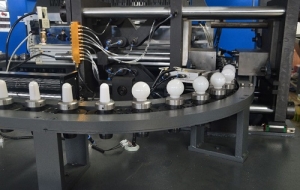
Manufacturing

Travelling

What’s your metaphor?

How do you feel about the prospect of doing the Unknown Language classes and assignment?