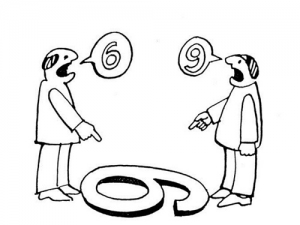
Teaching Skills Input Session 10: Fluency Vs Accuracy
Error Correction
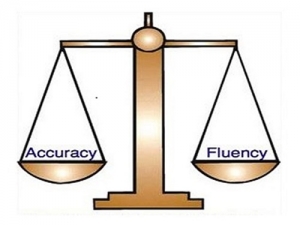
Hendrikson’s “five fundamental questions”:
- Should errors be corrected?
- If so, when should errors be corrected?
- Which errors should be corrected?
- How should errors be corrected?
- Who should correct errors?
1. Should errors be corrected?
According to Krashen’s Second Language Acquisition theory:
“When error correction “works”, it does so by helping the learner change his or her conscious mental representation of a rule. In other words, it affects learned competence by informing the learner that his or her current version of a conscious rule is wrong. Thus, second language acquisition theory implies that when the goal is learning, errors should indeed be corrected (but not at all times and not all rules, even if the goal is learning).”
– Stephen Krashen – Principles and Practice in Second Language Acquisition
2. If so, when should errors be corrected?
“If error correction aims at learning, it is logical to suppose that the conditions for error correction should be identical to the conditions for utilizing learning – we should focus our students on form, and correct their errors, only when they have time and when such diversion of attention does not interfere with communication. This implies no error correction in free conversation, but allows for error correction on written work and grammar exercises.”
– Stephen Krashen – Principles and Practice in Second Language Acquisition
Immediate Correction Vs. Delayed Correction
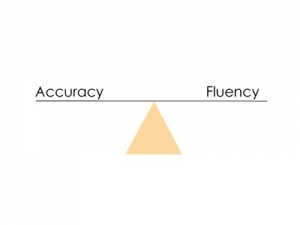
In lessons we often make a difference between language activities which concentrate on Accuracy (the students’ accurate and and correct use of language) and activities which concentrate on Fluency (the students’ ability to communicate effectively and spontaneously).
Before you begin an activity, bear in mind whether you are concentrating on accuracy or fluency. For a class discussion for example, fluency would be appropriate. The important thing is that students are expressing themselves and thinking on their feet. However if students have had time to prepare a role-play and are then going to perform it you may want to encourage accuracy. Be clear of the aims of the task and make sure students are aware of what you expect from them. Don’t present an activity as a fluency task and then pick them up on every single mistake.
Correction Slots (after the speaking activity) Vs. On-the-Spot Correction
One way to focus on students’ mistakes is to take ‘time out’ of an activity and look at mistakes as a group. When students are doing a speaking task in pairs or groups you can monitor the students and listen in on what they’re saying. Make a note of the mistakes you hear; whether they are pronunciation, grammatical or lexical. Collect a selection of their errors and then stop the activity. Write a selection of the mistakes on the board and ask students to correct them. If students are working in pairs and you have a left over student, why not assign them the role of assistant teacher? They can have a notebook and pen and make notes of mistakes they hear. If they do their job well they could even run the correction slot with their mistakes instead of you. Usually most of the mistakes can by corrected by the students themselves.
Correcting mistakes the second they are made has the advantage that you don’t have to bring the activity to a stop as is the case with a correction slot. Students often appreciate instant correction. Think about what type of activity it is before deciding whether or not it’s appropriate to correct on the spot. You don’t want to destroy the flow of the task by butting in. Students can also be responsible for on the spot correction if they are encouraged to pick up on each other’s mistakes.

Delayed Correction
Watch this teacher involve her 12-/13-year-old Italian students in the correction of their own errors.
When students are doing a communicative speaking activity we can eavesdrop on what they are saying so that we can comment on it later.
When we give feedback ‘after the event’ we should concentrate just as much on the content as on the form of what students say.
When students are doing a communicative speaking activity we can use reformulation so that they hear a correct way of saying something.
When we reformulate what students say during a communicative speaking activity, we usually do not expect them to repeat what they said correctly.
During a communicative speaking activity the way we react when students make mistakes is often more like scaffolding than direct teaching during an accuracy stage.
Fluency Vs. Accuracy: Task 1
Which of the following teachers would you most like to be taught by in a foreign language conversation lesson?
Mr. Chatterbox

He loves to take part in the conversation all the time, just like one of the students.
Ms. Corrector

She corrects everything all the time (in a nice way, of course).
Ms. Witness

She just listens to what’s going on without making much comment.
Mr. Eavesdropper

He listens to what’s going on and later, when the conversation is over, he gives you some feedback.
3. Which errors should be corrected?
Criteria for dealing with spoken errors
1. Does the mistake affect communication?
2. Are we concentrating on accuracy at the moment?
3. Is it really wrong? Or is it my imagination?
4. Why did the student make the mistake?
5. Is it the first time the student has spoken for a long time?
6. Could the student react badly to my correction?
7. Have they met this language point in the current lesson?
8. Is it something the students have already met?
9. Is this a mistake that several students are making?
10. Would the mistake irritate someone?
11. What time is it?
12. What day is it?
13. What’s the weather like?
‘Correction‘ by M.Bartram and R.Walton
New Mistakes?
Remind students that if they are always making new mistakes it’s okay. New mistakes are usually a sign that they are exploring new uses of language or experimenting with new vocabulary.
Old Mistakes?
If they are always repeating the same mistakes it’s not such a good sign! By noting their mistakes students have a record of their progress and can avoid repeating the same mistakes time and time again. It’s a good idea to have a set space in their notebooks to write down their errors and the correct version. One way of doing it is to divide a page into three columns (mistake, correction, note).
Action Required
1. When communication breaks down.
2. Rude or inappropriate language.
3. Habitual mistakes and high frequency errors.
4. How should errors be corrected?
Two of the most widely used methods of error correction are…
"Direct" Correction
Providing the correct form
"Iinductive" Approach
Allowing the student to discover the solution (inductive)
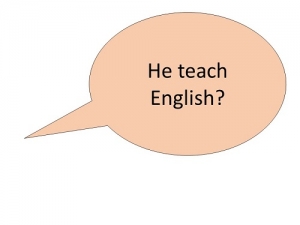
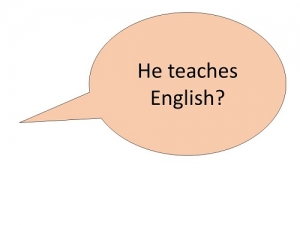
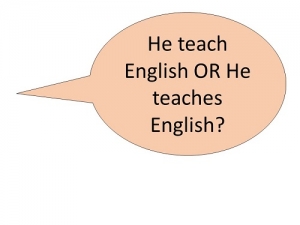
12 ways to correct a mistake:”He teach English“
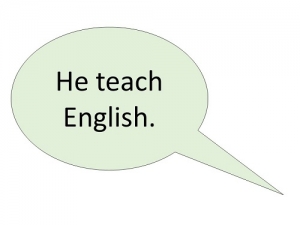
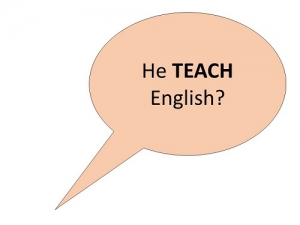
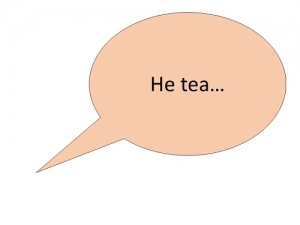
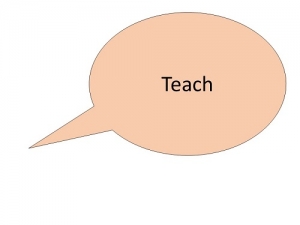
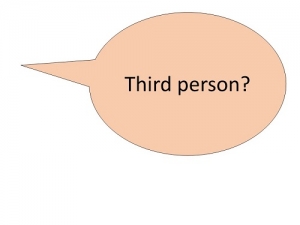
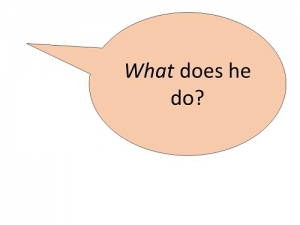
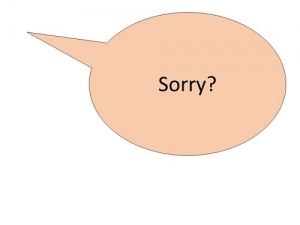
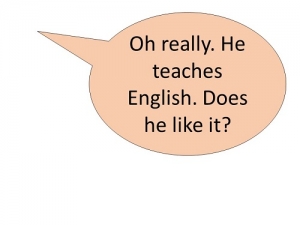
Which correction technique(s) would you prefer a teacher to use when correcting you? “
Would it matter who the teacher was?”
I’d prefer the teacher to …
… stress the mistake
… repeat up to the mistake
… repeat the mistake only
… repeat everything with rising intonation
… gestures, facial expressions and voice cues
… reformulate/recast using the correct language
… ask an “Or” question
… use an explicit question to highlight the mistake
… ask for clarification
… ask for repetition
… comment on the content/ ask follow-up questions
What about finger correction?
Watch Adrian Underhill explain this technique.
5. Who should correct errors?

Self correction
Peer correction
Teacher correction
Fluency Vs. Accuracy Task 2: Time to Reflect
Reflect on an error from a class you have taught and how you reacted and corrected it.
or
Reflect on an error made in a Unknown Language lesson using the same criteria.
- What type of mistake was it?
- Was it immediate or delayed correction?
- Who corrected it?
- How was it corrected?
- Was there any reflection by the student?
- Did all the students notice the correction?
- Was it feedback or just correction?
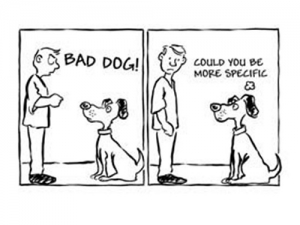
Feedback and Correction: the same or different?