
Learner Profile Input Session 2: Cultural Sensitivity & Empathy
Cultural Awareness

Cultural Awareness is the foundation of communication and it involves the ability to stand back from ourselves and become aware of our cultural values, beliefs and perceptions.
Why do we do things that way?
How do we see the world?
Why do we react in that particular way?
People see, interpret and evaluate things in different ways.
What is considered an appropriate behaviour in one culture is frequently inappropriate in another one. Misunderstandings arise when I use my meanings to make sense of your reality.
-Stephanie Quappe & Giovanna Cantatore
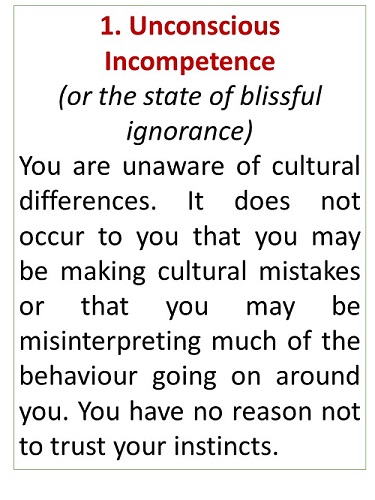
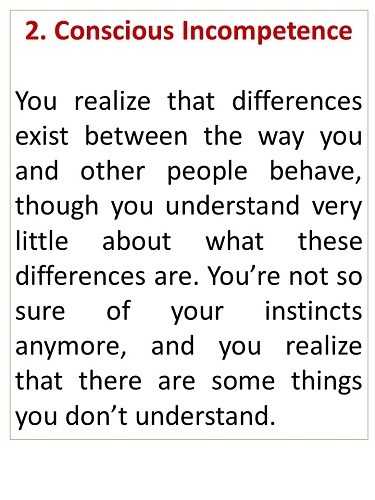
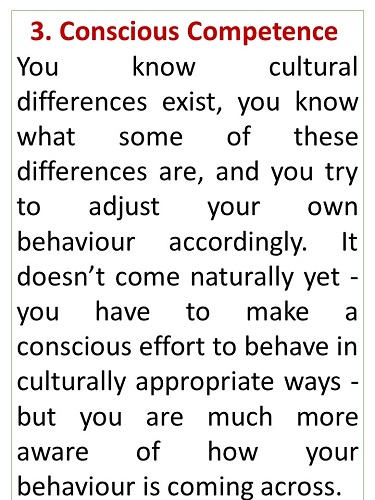
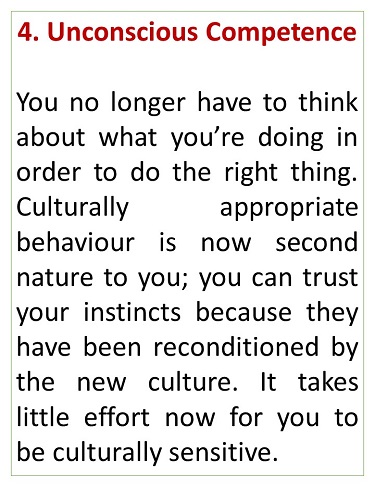
Degrees of Cultural Awareness
There are several levels of cultural awareness that reflect how people grow to perceive cultural differences
Click on the side arrows to see the other phases.
Cross-Cultural Communication Spanish & English
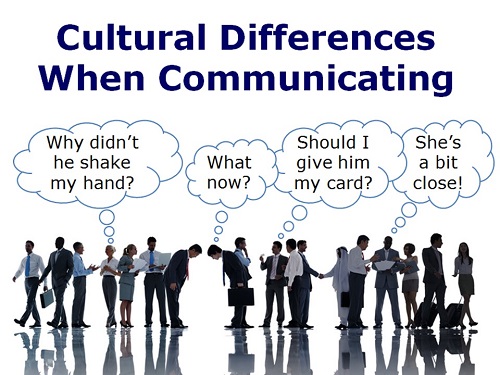
Address: direct/indirect? formal/informal? polite/impolite?
Distance: personal space? physical contact? sharing personal details?
Message: brevity? clarity? simplicity? sincerity?
Taboo subjects?
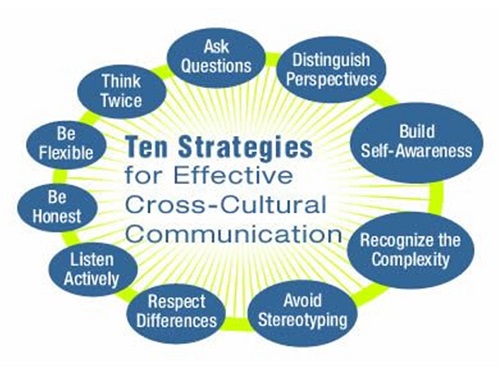
10 Strategies for Effective Cross-Cultural Communication
Taboo Topics (PARSNIPs)
“…taboo topics that publishers provide their writers, such as the so-called PARSNIP topics:
politics, alcohol, religion, sex, narcotics, isms (such as communism or atheism), and pork.
It’s this ‘parsnip policy’ that, arguably, imbues ELT books with a certain blandness.”
If in doubt, just remember your PARSNIPs!
Politics
Alcohol
Religion
Sex
Narcotics
Isms
Pork