
LAS Input Session 7: Awareness of Interlingual Interference
What is Interlingual Interference?
Interlingual: “Between or relating to two languages.” (OED)
Language transfer is the effect that one language (usually the mother tongue) has on another.
It is also known as interference because all transfer used to be seen as negative.

“…it became clear that language transfer could also be positive as well as negative. In fact, deliberate transfer from the L1 has been identified as a useful communication strategy, especially if the L1 and the L2 share many features in common.”
“Since transfer mistakes arise where the systems of two languages are similar but not identical, they are most common (at least as far as grammar and vocabulary are concerned) in … students who speak languages closely related to English.
A learner’s English is therefore likely to carry a signature of his/her mother tongue, by virtue of what goes wrong and of what does not.
“
The Relationship between Spanish and English
Both languages use the Roman alphabet and this knowledge helps to build a phonemic and phonological foundation.
30% to 40% of all words in English have a related word in Spanish. With similar sound, appearance, and meaning, these cognates help students to transfer that word knowledge into their second language.
Except for a couple of word order exceptions (adjective before noun in English and noun before adjective in Spanish), sentences in both languages have the same basic structures (compared with English and Chinese or other non-Latin derived languages).
Reading and writing use the same basic processes (i.e. phonemic awareness, decoding, fluency, comprehension, writing mechanics).
Translanguaging
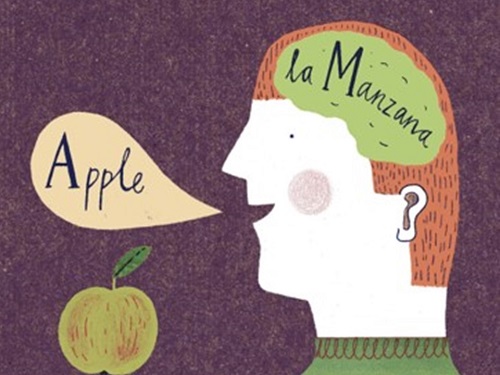
…is making connections between the L1 and L2 languages.
…is using the knowledge embedded in the mother tongue and transferring it to L2 knowledge.
…is accepting that most learners can’t avoid using their L1 and they mentally map the L2 on to the existing L1, drawing connections, contrasting ideas and viewing the L2 through their L1.
Spanglish

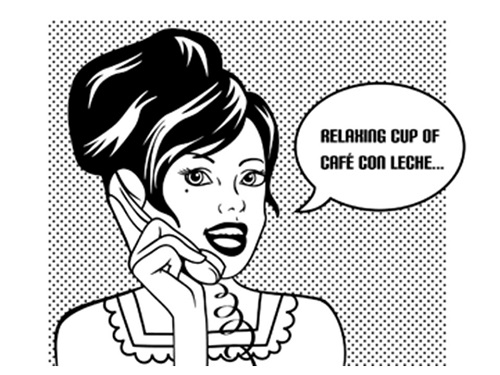

Code-Switching & Code-Mixing
Code-Switching
…is changing from one language to another while speaking or writing (perhaps to change roles, topics or include somebody in the conversation).
…is often deliberate.
…is usually whole phrases or utterances.
…is most common amongst competent bilinguals.
Code-Mixing
…is introducing occasional words from one language while speaking another (perhaps because they don’t know/don’t remember the word or there isn’t a direct equivalent).
…is often unintentional.
…is usually individual words or short phrases.
…is more common amongst less competent learners.
This is not usually a sign of confusion or language impairment, but rather a common linguistic phenomenon.
L1 in the Classroom
For many decades (and possibly longer), teachers have debated the following question:
Should we allow students to use their mother tongue
in the English-language classroom?

Making the Most of Multilinguism
Watch this video (from the Basque country) on how they are making the most of the knowledge students have of different languages (Basque, Spanish and English as a minimum).
Is it an idealistic or a realistic view?
The Mother Tongue
“It is a matter of common experience that the mother tongue plays an important part in learning a foreign language. Students are always translating into and out of their own languages – and teachers are always telling them not to…. In fact, if we did not keep making correspondences between foreign language items and mother tongue items, we would never learn foreign languages at all. Imagine having to ask whether each new French car one saw was called ‘voiture’, instead of just deciding that the foreign word was used in much the same way as ‘car’ and acting accordingly. When we set out to learn a new language, we automatically assume (until we have evidence to the contrary) that meanings and structures are going to be broadly similar to those in our own language. The strategy does not always work, of course – that is why languages are difficult to learn – and it breaks down quite often with languages unrelated to our own. But on balance this kind of ‘equivalence assumption’ puts us ahead of the game; it makes it possible for us to learn a new language without at the same time returning to infancy and learning to categorize the world all over again.”


