
LAS Input Session 2: Grammar – Time & Tenses
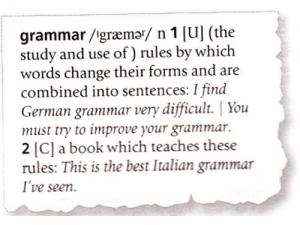
What Is Grammar?

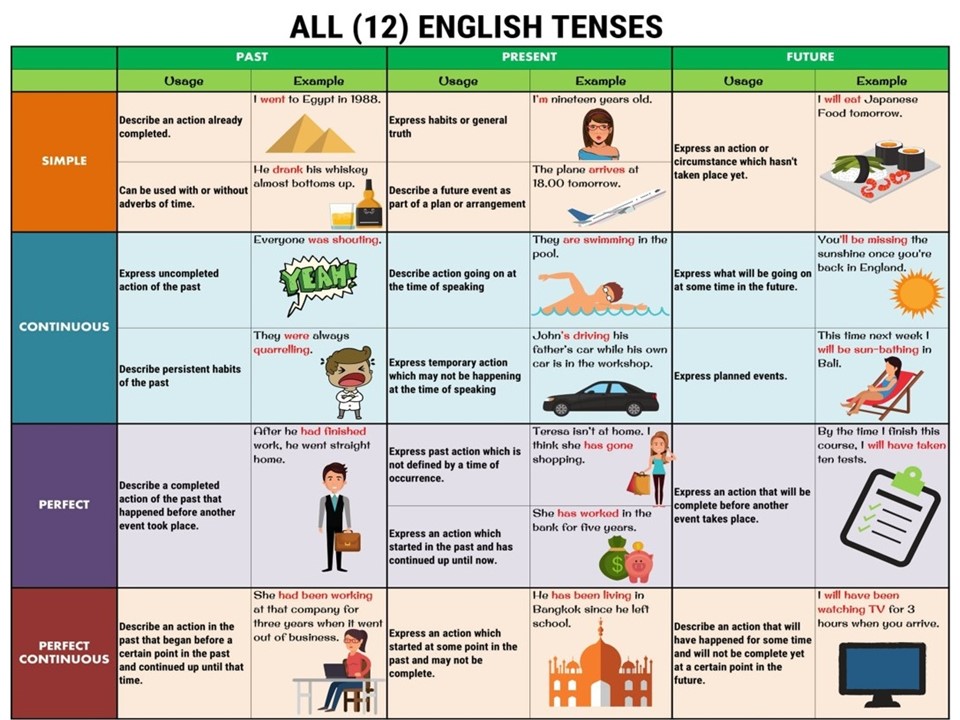
Verb Tenses in English
Time & Tenses: Task 1
For each tense, think of a sentence using that tense.
- Present Simple
- Present Continuous
- Present Perfect Simple
- Present Perfect Continuous
- Past Simple
- Past Continuous
- Past Perfect Simple
- Past Perfect Continuous
- Future Simple
- Future Continuous
- Future Perfect Simple
- Future Perfect Continuous
- _______________
- _______________
- _______________
- _______________
- _______________
- _______________
- _______________
- _______________
- _______________
- _______________
- _______________
- _______________
Key Questions
What is a tense?
Technically, tense is a change to a verb to indicate time.
In which situations do we change the base form of a verb in English to indicate time?
In English, we only have two situations in which the base form of a verb is changed to indicate time:
Base form: talk
Present: talk(s)
Past: talked
How many aspects are there in English?
There are four aspects in English:
Simple: expresses single actions, habits and routines
Continuous (or progressive): expresses incomplete/temporary actions or actions in progress at the time of speaking
Perfect: expresses the results of previous actions or states
Perfect Continuous: expresses incomplete/temporary actions or states that began before a specified or implied time
What’s the difference between tense and aspect?
Tense tells us when something happens.
Aspect gives us information about how:
- Is it a single event?
- Is it a series of events over time?
- Is it an action that is ongoing and likely to remain so?
Time & Tenses: Task 2
| Aspect: | Simple | Continuous | Perfect (Simple) | Perfect (Continuous) |
|---|---|---|---|---|
| Tense | ||||
| Past: | 1. _______________ | I was speaking English. | I had spoken English. | 2. _______________ |
| Present: | I speak English. | I’m speaking English. | 3. _______________ | I have been speaking English. |
| Future: | I will speak English. | 4. _______________ | I will have spoken English. | I will have been speaking English. |
Time & Tenses: Task 3
| Where do you live? | (a) “I live in Spain.” | (b) “I’m living in Spain.” |
Both of these answers are correct. What’s the difference?
Time & Tenses: Task 4
- I’m staying at Mary’s place until I move into my new house.
- She was talking on the phone when I came in.
- I’ve been working on my assignment this afternoon.
- Stop making all that noise – I’m watching the news!
- Whenever I see him, he’s always standing outside smoking a cigarette.
(a) Repetition
(b) Duration
(c) Synchronicity
(d) Being Temporary
Time & Tenses: Task 5
(a) She’s working really hard this month.
(b) Someone from history I’m really admiring is the Roman Emperor, Hadrian.
(c) He can’t come to the phone because he’s having a shower.
(d) How long have you been knowing Dan?
(e) She’s been cutting her finger with the kitchen knife.
(f) We’re having a small holiday home on the coast.
(g) The car has been hitting the lamp post.
(h) I’m just admiring your beautiful new vase.
(i) He is resembling his father a lot.
(j) They were all jumping up and down with excitement.


